





How can we help you?
We invite you to get in touch via a free, no-obligation initial consultation.


A low-leverage, asset-backed private banking case requiring a holistic assessment of wealth, future liquidity events, and business ownership — rather than reliance on historic taxable income alone.
Our clients were the co-founders and significant shareholders of an award-winning creative and gaming business. Although no longer involved in day-to-day management, they retained a combined shareholding of approximately 45% and continued to benefit financially from the group’s ongoing success.
The company was well capitalised and in an active investment phase, deploying resources into future game development and strategic partnerships. Historic profitability had been strong, with post-tax profits exceeding £5m in prior years, though current-year figures reflected the cost of reinvestment rather than distribution.
Following the sale of a controlling interest to an Employee Ownership Trust (EOT) in 2022, approximately £9m of deferred consideration remained outstanding, with repayments expected to resume the following financial year — representing a significant future liquidity event.
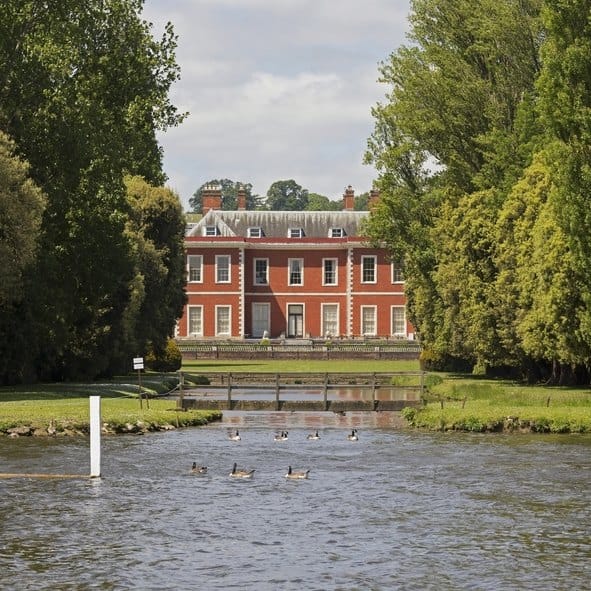
The clients needed to raise £2.7m against their main residence to:
Refinance their existing mortgage
Reimburse capital they had already invested in extensive renovations
Provide liquidity for school fees and lifestyle costs
Despite very substantial overall wealth and a loan sized at under a third of the property’s value, the case presented several obstacles that ruled out a conventional mainstream lending approach:
No controlling shareholding. Neither applicant held a controlling stake in the business, which prevented many lenders from using retained company profits to assess affordability.
Irregular dividend history. Dividend income had historically been substantial but was not always distributed in line with accounting profits — a pattern that conventional affordability models struggle to accommodate.
A large but temporarily dormant asset. The £9m EOT deferred consideration balance was a genuine and significant asset, but repayments had paused while the business entered a new investment cycle.
Cyclical sector, reinvested profit. The business operated in a cyclical industry, with reported profitability temporarily lower as funds were channelled into game development and IP creation.
Wealth held outside conventional income. A large proportion of the clients’ overall wealth sat in business interests, deferred consideration, and future income streams rather than salaried or dividend income in the current year.
Interest-only requirement. Lenders needed to be comfortable relying on a blend of repayment strategies rather than earned income alone.
Purpose of funds. Part of the borrowing was to reimburse historic renovation spend — a use of funds many lenders treat cautiously.
Rather than presenting the case around a single year’s income, we built the application around the clients’ overall financial position: their shareholding value, the strength and trajectory of the underlying business, the scale and timing of the EOT deferred consideration, and their broader asset base — including a £2.6m holiday let property (with an existing £1.375m mortgage) and c.£700,000 in pension assets.
We identified and approached a private banking lender able to take a genuinely holistic, case-by-case view of affordability and repayment, rather than applying a standard income-multiple model. The interest-only repayment strategy was presented across several credible routes:
Sale of the main residence
Sale of the holiday let property
Resumption of EOT/vendor loan note repayments
Ongoing dividend income from the company
The lender was comfortable taking a pragmatic, evidence-based view of the clients’ wealth and future liquidity, resulting in a successful £2.7m interest-only refinance at a conservative 31.8% loan-to-value. The facility gave the clients the funds needed to settle their existing mortgage, recoup renovation costs, and support both lifestyle and business commitments — without requiring a distressed sale of assets or a compromise on structure.
If this scenario resonates with you or you’re seeking personalised mortgage advice for another situation, please get in touch — we’d be happy to see how we can help.
Call our team today on 0800 652 0971 or email info@privatefinance.co.uk.
Disclaimer:
The information presented in our case studies is intended for illustrative and marketing purposes only. Some case studies may be based on multiple enquiries or hypothetical scenarios to demonstrate typical processes or outcomes. Not all case studies represent completed business transactions, and the inclusion of a case study does not imply that the business was successfully concluded. Please be aware that Private Finance is not a tax advisor, and this page does not constitute tax advice. The Financial Conduct Authority does not regulate commercial finance and some forms of buy-to-let mortgages.
YOUR HOME MAY BE REPOSSESSED IF YOU DO NOT KEEP UP REPAYMENTS ON YOUR MORTGAGE.
