The Bank of England has held the base rate at 3.75% as it continues to assess the outlook for inflation, economic growth and the impact of recent volatility in energy prices. What does this mean for the UK mortgage market?
Today, the 30th of July 2026, the Bank of England’s Monetary Policy Committee (MPC) voted to hold the base rate at 3.75%. Consumer Prices Index (CPI) inflation has fallen a little further than expected, easing to 2.6% in June from 2.8% in May 2026, though this is expected to rise later this year as higher energy prices feed through.
The base rate has now held since December 2025, when the Bank reduced it from 4%, making this the fifth consecutive meeting that the MPC has left rates unchanged.
The Bank’s guidance around the direction of the base rate has shifted this year too. In February, the MPC signalled that the base rate was “likely to be reduced further”; that decision to hold passed by five votes to four, with the four members wanting to reduce the rate to 3.5%. Today, that easing bias is gone. The latest decision was passed by six votes to three, with three members preferring an increase in the base rate to 4%.
With the next decision due on 17 September, it is unclear which direction the Bank will take next: there are continued signs of easing underlying inflation and little evidence so far that higher energy costs are feeding through into wider price rises, suggesting the markets may lean towards another hold. Yet three MPC members voted for a rise this month.
How the Base Rate Decision Affects Your Mortgage
The base rate feeds through to mortgages differently depending on the type of product you hold.
Tracker and variable-rate mortgages typically move directly with the base rate. With the rate held at 3.75%, payments on these products stay where they are for now. However, payments could increase or decrease in the future depending on changes to the base rate.
Fixed-rate mortgages work differently. Their pricing is driven largely by variables such as Sterling Overnight Index Average (SONIA) swap rates, which reflect what the markets expect interest rates to average over a given term, rather than by today’s base rate alone. When swaps rise, fixed mortgage pricing tends to follow.
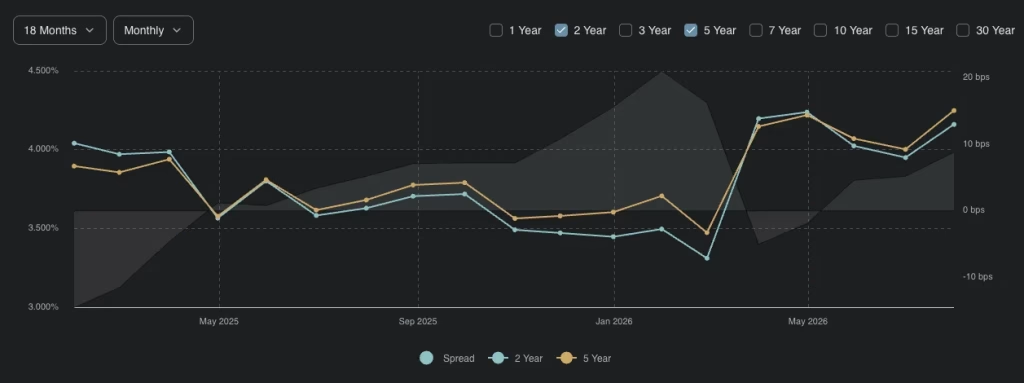
SONIA Swap Rates Are Higher
Over the past month, SONIA swaps have risen across every term, and they sit higher than they did a year ago. This tells us the markets are pricing in the risk that rates might stay higher for longer, or rise from here, rather than continuing to fall.
Source: Chatham Financial, Rates as of 30-Jul-2026 3:00 PM GMT+1. Change in bps from prior EOD rate.
Day to day the moves are small and mixed, but the trend over the past month and year is clearly upward. This pressure can filter through to the fixed deals on offer, and sometimes at short notice.
Should You Choose a Fixed or Variable Rate Mortgage?
There is no single right answer, and the most suitable option will depend on your circumstances, financial objectives and appetite to risk. A tracker mortgage generally moves in line with changes to the Bank of England base rate, meaning your monthly payments could increase or decrease over time. A fixed rate gives you certainty over your payments for the length of the fixed rate period, which many borrowers value when the economic and market outlook can be considered uncertain.
With swaps rising and the possibility of a base rate increase now on the table, borrowers approaching the end of their current deal may wish to consider securing a new rate sooner rather than later.
There is no single right answer, and the most suitable option will depend on your circumstances, financial objectives and appetite to risk. A tracker mortgage generally moves in line with changes to the Bank of England base rate, meaning your monthly payments could increase or decrease over time. A fixed rate gives you certainty over your payments for the length of the fixed rate period, which many borrowers value when the economic and market outlook can be considered uncertain.
Is Your Current Deal Expiring in the Next 6–9 Months?
If your current mortgage deal is due to end within the next six to nine months, it’s worth reviewing your options early. Many lenders allow you to secure a new fixed-rate deal several months before your existing one expires.
Securing a rate early may help protect against increases in mortgage pricing. Many lenders allow borrowers to switch to a more competitive rate with them should one become available before your new mortgage completes, although this varies between lenders and products. This gives you protection against unexpected increases while retaining the flexibility to benefit from any improvements in pricing before completion.
Lenders are continuing to innovate, opening doors for borrowers, responding to market changes and remaining willing to lend across a wide range of circumstances.
Working with an experienced mortgage broker can help ensure you are well positioned as market conditions continue to evolve. Working with an experienced mortgage broker can help ensure you are well positioned as market conditions continue to evolve. To learn more about your mortgage options, you can reach our team on 0800 652 0971 or email info@privatefinance.co.uk.
This article is based on information available on the date of issue, 30th July, 2026.
Disclaimer: The views and opinions expressed in this content are those of the author and do not constitute financial, legal, or professional advice, nor should they be interpreted as a recommendation. They do not necessarily reflect the official views, policies, or positions of Private Finance, and are not intended to represent broader market or industry perspectives.
Sources:
- Bank of England Monetary Policy Summary, February 2026
- Bank of England Monetary Policy Summary, July 2026
YOUR HOME MAY BE REPOSSESSED IF YOU DO NOT KEEP UP REPAYMENTS ON YOUR MORTGAGE.