















4.97 out of 5 based on 2,400+ reviews
A self build mortgage funds the construction of your own home, released in stages as the project progresses rather than as a single lump sum.
Rated 4.97 out of 5 from 2,400+ reviews


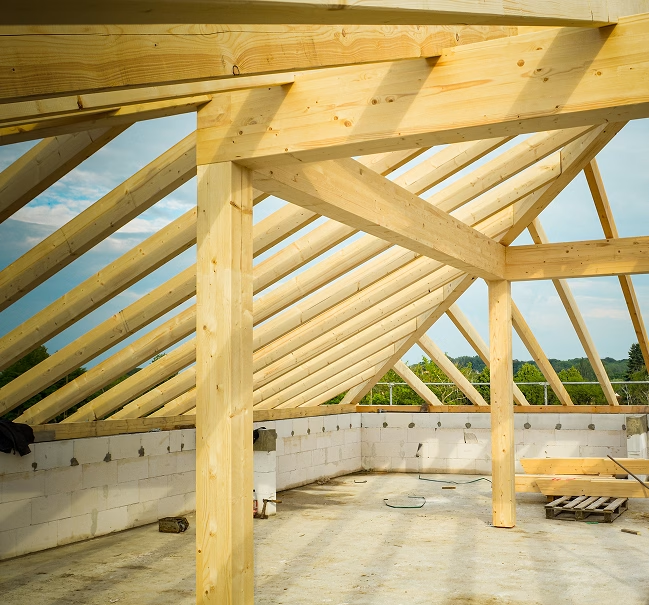
A self build mortgage is a specialist finance product designed for people who want to construct their own home rather than buy an existing property.
Whether you’re building a new home from the ground up, converting a barn, or carrying out a major renovation, a self-build mortgage provides the funding you need, released in stages as the project progresses rather than as a single lump sum upfront.
Unlike a standard residential mortgage, a self build mortgage releases funds gradually at agreed milestones throughout the construction process. This staged approach helps lenders manage risk while giving you consistent access to capital when you need it most.
Self build mortgages are commonly used for building new homes from scratch, custom-designed residential properties, barn conversions and change-of-use projects, and large-scale renovations or redevelopments.
If your project involves construction rather than a straightforward purchase, a specialist self build mortgage is almost certainly what you’ll need.
A traditional residential mortgage releases the entire loan as a single lump sum at completion — a structure that simply doesn’t suit construction projects, where costs arise at multiple different stages. Self build projects require a mortgage product built around the way building actually works, which is why specialist lenders exist for this purpose.
During the build phase, self build mortgages are typically interest-only, which keeps your monthly outgoings low and helps protect your cash flow while construction is underway.
Funding is released at key milestones agreed in advance between you and your lender. These typically align with construction stages such as land purchase, foundations, wall plate level, wind and watertight stage, first fix, and final completion.
A valuer is usually instructed before each release to confirm that work has been completed satisfactorily and that the projected end value of the property remains on track.
There are two types of stage payment structures to be aware of:
Arrears stage payments are the most common. Funds are released after each stage of work has been completed and signed off. This means you’ll need savings or alternative financing to cover costs upfront before being reimbursed — so careful cash flow planning is essential.
Advance stage payments are less common and typically offered by specialist lenders. Here, funds are released before each stage begins, helping you avoid cash flow gaps and purchase materials in advance. If you don’t have significant reserves to draw on, an advance stage mortgage may be worth prioritising.
Self build mortgages can be tricky to navigate without guidance. Private Finance offers specialist advice for self build mortgages and has a suitable range of contacts to match you with possible lenders to get your project off the ground.
We’re an independent, whole-of-market broker with access to over 300 lenders, including high-street banks, private banks, and specialist providers, allowing us to find the most suitable mortgage solution for you.
We take a holistic approach to mortgage advice, considering both your personal circumstances and the wider market, while working closely with wealth advisers and accountants to deliver your desired outcome.
With an average rating of 4.97/5 from more than 2,000 reviews, we deliver an outstanding client experience, handling the complexities of the mortgage process so you can stay focused on day-to-day life.
A residential bridging loan is a short-term mortgage secured against property, enabling clients to act quickly in property transactions. These loans are ideal for bridging the gap between buying and selling, providing rapid funding where traditional mortgages may not be feasible.
Bridging loans are often used to secure a property at auction, buy before selling, fund refurbishment or development projects, or release equity for investment. Lenders focus on the property value, the exit strategy, and the borrower’s financial position rather than standard income multiples. This approach allows clients to access capital efficiently and take advantage of time-sensitive opportunities in the property market.
The Financial Conduct Authority does not regulate some aspects of Bridging Loan
Your home may be repossessed if you do not keep up repayments on your mortgage
The amount available to you depends on your personal financial circumstances and the specifics of your project. In 2026, most lenders require a minimum 20% deposit towards the land purchase, with additional funds available to cover the early stages of the build.
Affordability is assessed on the basis of your income and financial commitments, the combined cost of land and construction, and the Gross Development Value (GDV) of the finished property.
The process begins with assessing your budget — understanding your income, outgoings, land costs, and expected build expenses. From there, you’ll need to secure a suitable plot with either full planning permission already in place or strong prospects of obtaining it.
Once you have your land and a detailed build plan — including drawings, timelines, and a full cost breakdown — you can arrange the necessary documentation and insurance before formally applying. A specialist self build mortgage broker can be invaluable at this stage, as they have access to lenders and products not available directly to the public.
After your application is submitted, the lender will commission a valuation of the land and proposed build before issuing a formal mortgage offer. Construction can then begin, with funds drawn down at each agreed stage as the project progresses.
Once construction is complete — or typically 24 months after the first funds were released — the mortgage usually converts from interest-only to a standard capital repayment mortgage.
At this point, you have the option to remain with your existing lender, remortgage to a new lender, or switch to a more competitive rate. Many borrowers find that remortgaging at completion significantly reduces their monthly payments.
Building your own home gives you a level of control and personalisation that buying an existing property simply can’t match. A well-managed self build can result in a finished property worth considerably more than the total cost of land and construction — and you’ll have a home designed precisely to your specification, with full control over materials, layout, and quality.
That said, self build mortgages are more complex than standard products. They require careful budgeting, thorough documentation, and strong project management throughout. Cost overruns and build delays are real risks, and the ongoing valuation process adds an administrative layer that buyers of existing properties don’t face. Going in well-prepared — ideally with expert advice — makes a significant difference to how smoothly the process runs.
Your home may be repossessed if you do not keep up repayments on your mortgage
Whatever your situation, our premier mortgage team can advise on suitable solutions. We specialise in complex and bespoke mortgage solutions to help you find competitive terms.
Residential Mortgages
Specialist Mortgages
Buy to Let Mortgages
Mortgages by Profession